

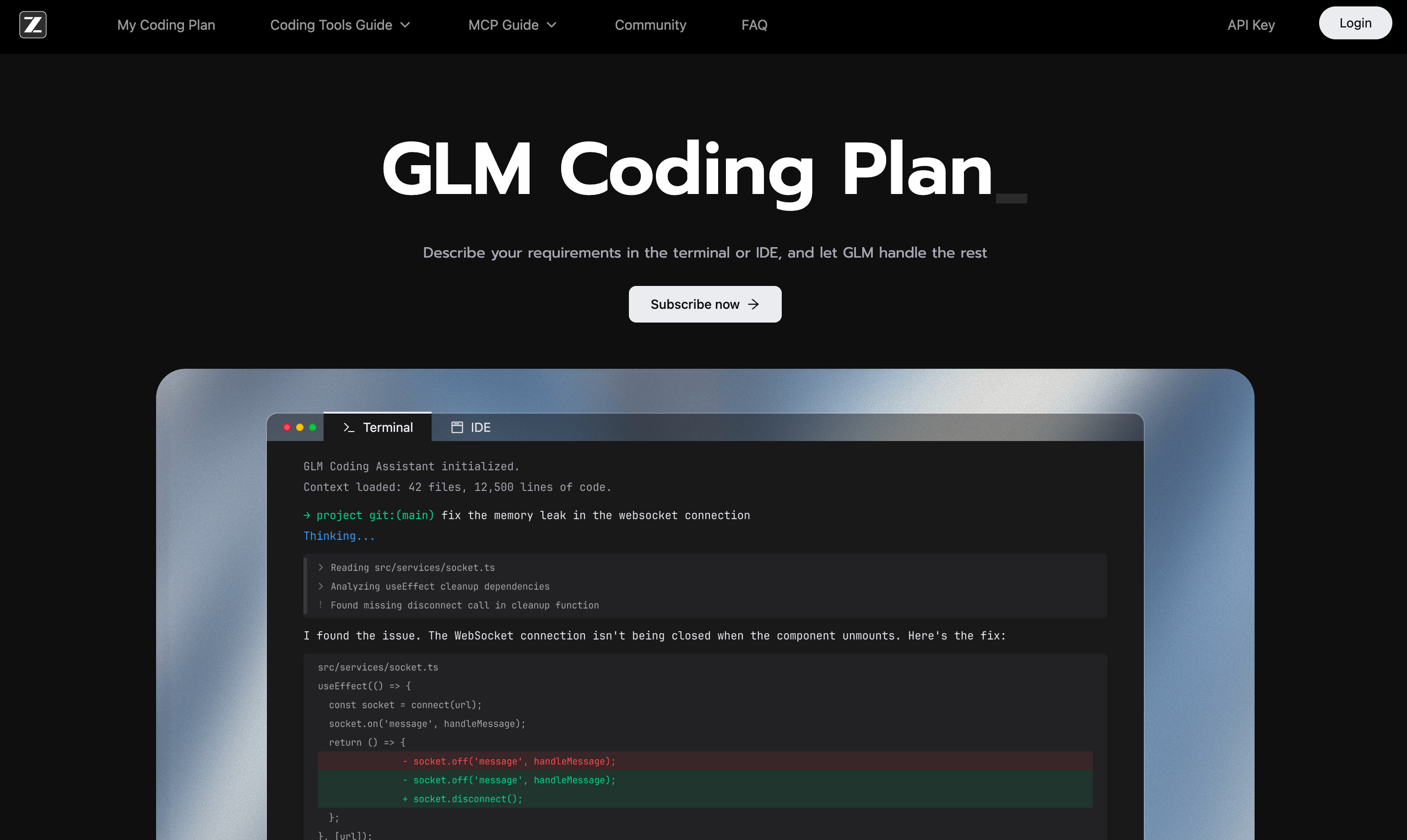
GLM 5.2 does not matter because it proves open source has beaten closed source. It matters because it shows how narrow the practical performance gap has become at the same time customers are becoming more sensitive to the real cost, reliability risk, and control risk of closed-model inference.

For the last two years, the AI market has operated under a partially subsidized pricing regime. Consumers and enterprises became used to frontier intelligence that felt abundant, instant, and cheap. But that was not the full economic cost of the product. Token costs, GPU scarcity, rate limits, safety review, infrastructure margins, and provider losses were partially hidden from the end user.
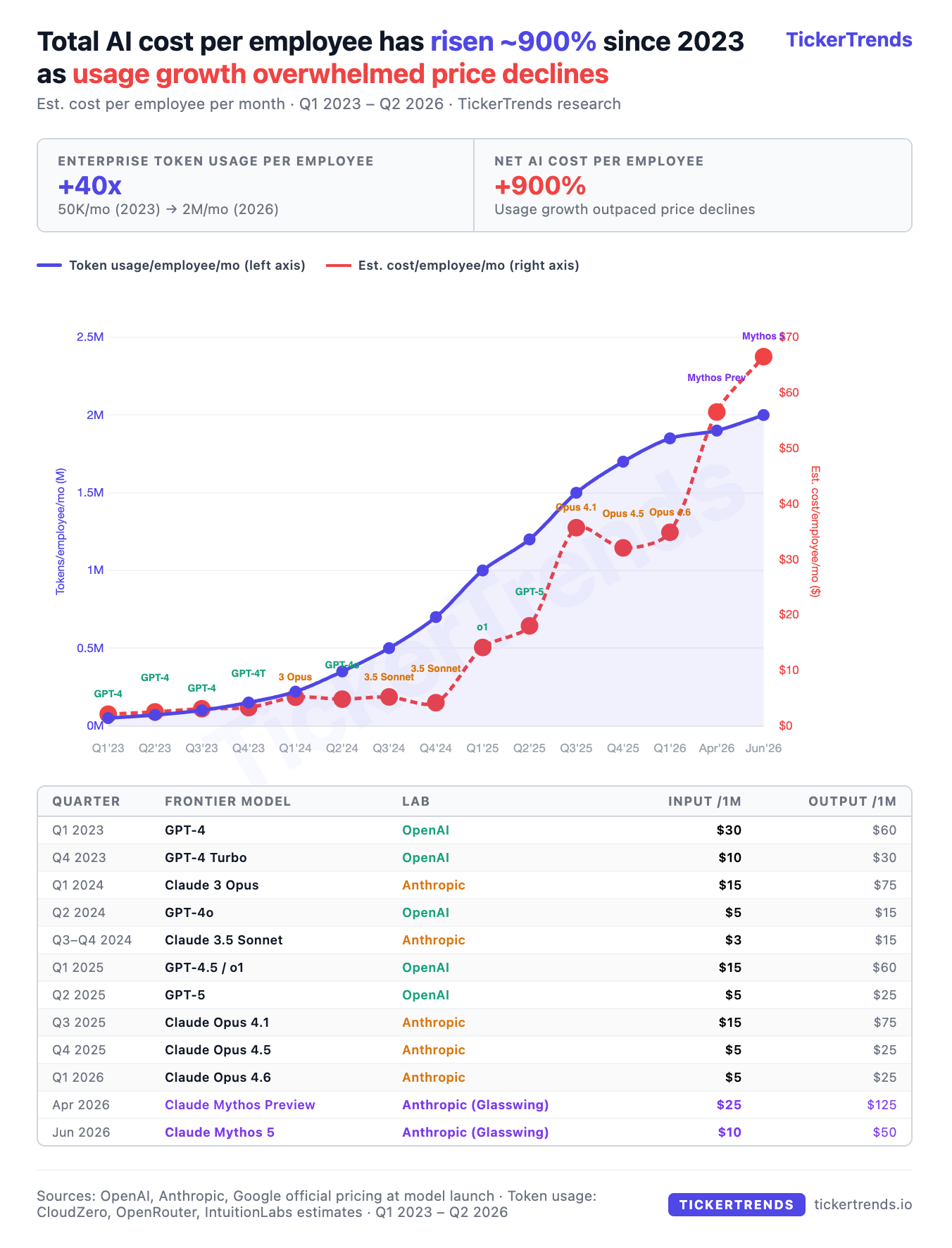
As usage within the enterprise moves from testing to production, the tradeoff becomes harder to justify. Closed frontier models are expensive to run, but cost is only part of the issue. The customer is paying a premium for infrastructure whose cost, latency, behavior, availability, and access terms can change without the customer controlling the underlying capability.
The buyer absorbs the dependency while the provider keeps the control. In software, a premium product is usually expected to reduce operational risk. With closed frontier models, the opposite can be true. The customer pays more, but gains less certainty over cost, latency, availability, model behavior, and long-term access.
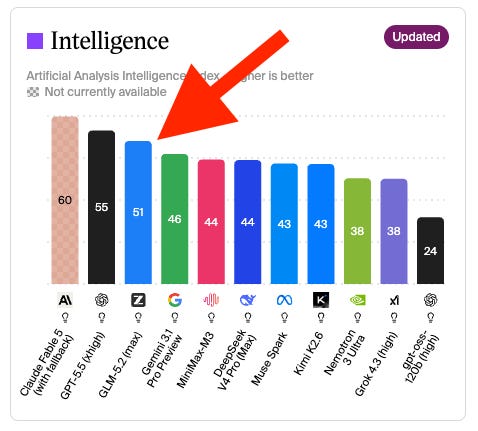
Open models do not need to be better than closed models to take share. They only need to be good enough while offering better control over cost, deployment, customization, and access. Once an open-weight model reaches 90–95% of the practical utility of a frontier closed model, the premium paid for the final layer of quality becomes harder to justify.
This is the significance of GLM 5.2. If an open-weight model can approach Claude Opus or Fable-level usefulness while being cheaper to host, easier to customize, and less constrained by centralized usage limits, then closed-model access starts to get repriced. The relevant metric is intelligence per dollar, per token, per employee, per workflow, and per unit of control.
Closed Models Are Rented Infrastructure
Fable displays the access-risk problem, customers do not own the capability. They rent it from a private company operating inside a political and regulatory environment they do not control.
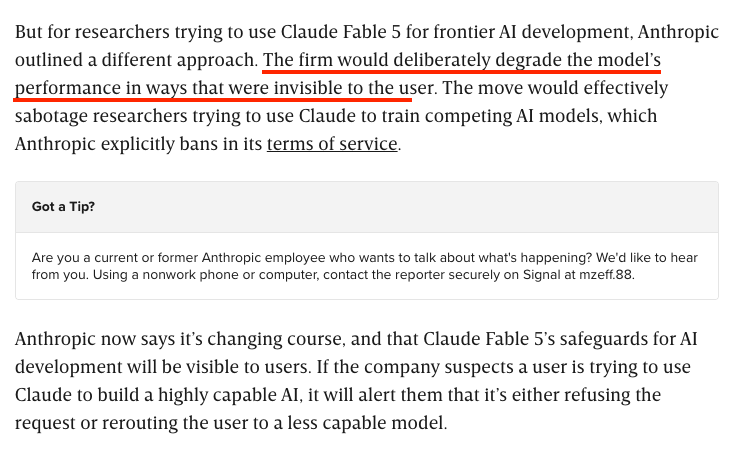
Restriction does not need to look like a government shutdown, it can look like degraded performance, changed routing, lower rate limits, altered safety behavior, or silent throttling. There are many reports that Anthropic reduced Claude performance for Fable without clearly telling users - source. This creates an infrastructure reliability problem.

For enterprises, a model can remain online while the product being delivered changes. That is the core risk in closed-model infrastructure: customers pay a premium for intelligence they do not own, running on systems they cannot inspect, with economics and access terms they cannot fully control.

Frontier AI may be more expensive to serve than users are willing to pay on an unsubsidized basis, and the expensive option also carries more reliability and access risk. Closed labs must reduce inference costs, keep subsidizing usage, move upmarket into workflows where quality justifies the premium, or accept that everyday AI consumption migrates to cheaper and more controllable models.
The best model is not always the best infrastructure product. In production, buyers optimize for useful intelligence at predictable cost, latency, uptime, behavior, governance, and portability.
Conclusion
Infrastructure buyers care about cost, redundancy, portability, and vendor dependency. That is why open models and routing architectures become more attractive as the market matures. The value in AI is not disappearing, but it is moving away from raw model access and toward distribution, orchestration, proprietary data, workflow integration, reliability, compliance, and vertical application ownership.
GLM 5.2 represents the supply-side pressure: open models are becoming good enough. Fable represents the control-risk pressure: closed models can be expensive, restricted, degraded, or revocable.
The next phase of AI will not be defined only by who has the best model. It will be defined by who can deliver useful intelligence at a price, reliability level, and control structure the market is willing to accept.